Bad breath is not usually a tooth problem. It's a coating problem - and it sits on the single largest, least-cleaned surface in your mouth. Here's what's actually happening, what the research says, and why a brush beats a scraper.
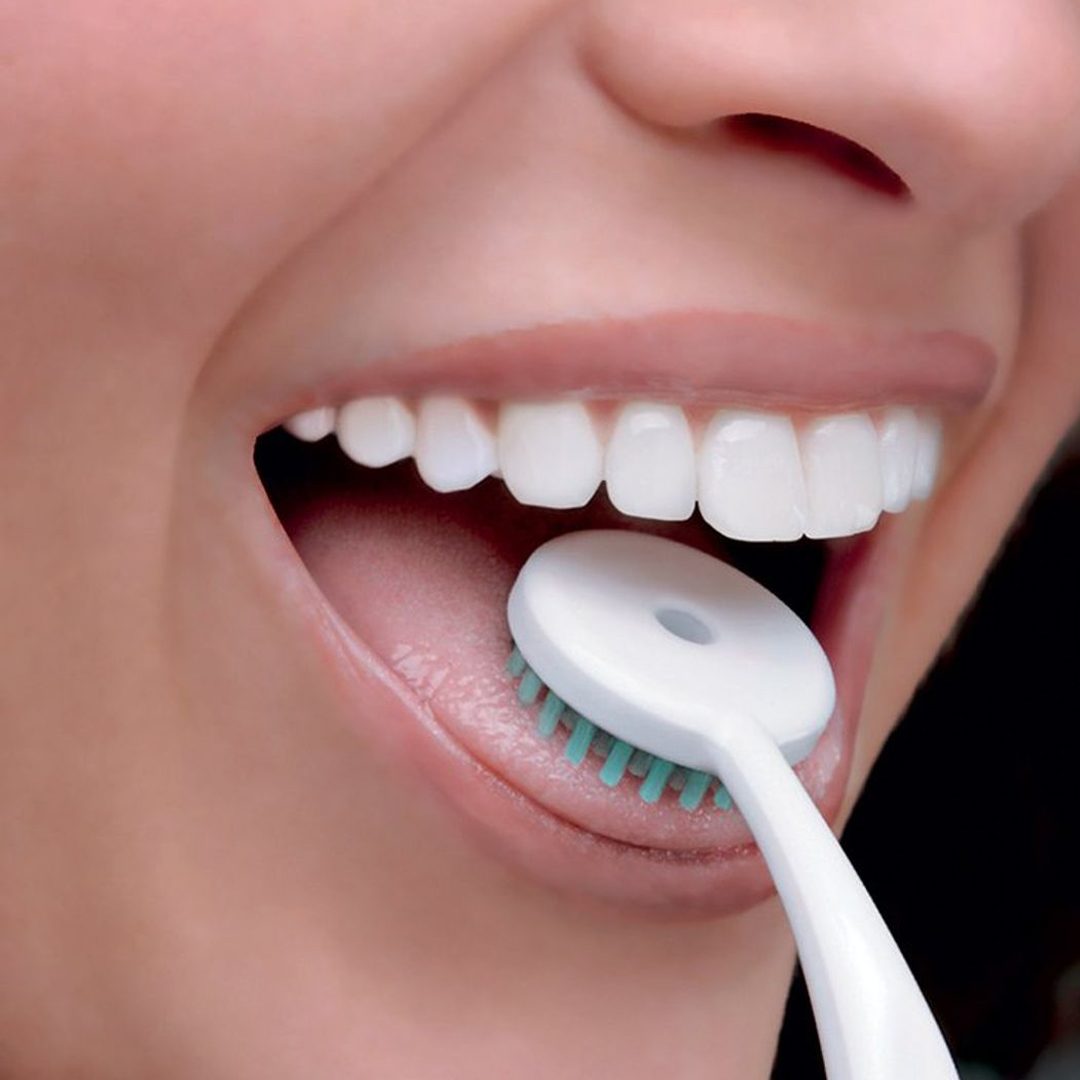
Under magnification the tongue's surface is a landscape of tiny crevices. Food debris, dead cells and anaerobic bacteria settle into them and form a coating. Those bacteria release volatile sulphur compounds - the gases behind the smell. Rinsing doesn't shift the coating. A toothbrush skims it. It needs to be lifted out.
of adolescents and adults are estimated to have halitosis - roughly one in three people.
Silva et al., Clinical Oral Investigations, 2018 (95% CI 24.6-39.0%)of bad breath originates inside the mouth - not the stomach, not the sinuses.
Frontiers in Oral Health, 2023of halitosis cases in one clinical study traced back to tongue coating - the single most common cause.
Frontiers in Oral Health, 2023, citing an observational studyThat's the entire difference, and it's the reason people who've given up on tongue cleaning tend to get a different result here. Short, firm bristles reach into the texture; a flat edge can only travel over it.
| Toothbrush | Metal scraper | TUNG Brush & Gel | |
|---|---|---|---|
| Reaches into the crevices | ✕ | ✕ | ✓Short, firm bristles |
| Comfortable at the back | ✕ | ✕ | ✓Low-profile head |
| Neutralises odour compounds | ✕ | ✕ | ✓With TUNG Gel |
| Made for the tongue | ✕ | ✓ | ✓ |
| Easy to stick with | ✕ | ✕ | ✓ |
Comparison reflects product design and the mechanism described in the sources cited on this page. Individual results vary.
The honest version, not the oversold one.
Cochrane review (Outhouse et al.); Frontiers in Oral Health, 2023.
Apply a small amount of TUNG Gel to the brush. Your mouth is already clean, so you're not just moving debris around.
Short strokes, light pressure. Start mid-tongue for the first few days and work further back as you get used to it - this is how you avoid gagging.
Rinse the brush thoroughly under running water and let it air dry, the same as a toothbrush.